
June 10, 2026
Everything You Need to Know About IV Catheter Needle Sizes
Intravenous (IV) therapy is one of the most common medical procedures used in hospitals, clinics, and emergency care. A key part of this process is selecting the correct IV catheter needle size. Choosing the right size ensures safe medication delivery, patient comfort, and proper flow rates.
In this guide, we’ll break down IV catheter needle sizes, their uses, color coding, and how healthcare professionals choose the right gauge for different medical situations.
What Is an IV Catheter?
An IV catheter (or IV cannula) is a small, flexible tube inserted into a vein to deliver fluids, medications, or blood products directly into the bloodstream. The needle is used to guide the catheter into place and is removed once insertion is complete.
IV catheters are essential in:
- Emergency care
- Surgery
- Hydration therapy
- Medication delivery
- Blood transfusions
Understanding IV Catheter Needle Sizes (Gauge System)
IV catheter sizes are measured in gauges (G). The gauge refers to the diameter of the needle:
- Smaller gauge number = larger needle
- Larger gauge number = smaller needle
This means a 14G needle is much larger than a 24G needle.
Common IV Catheter Sizes and Uses
14G – 16G (Large Bore Needles)
- Used for trauma or emergencies
- Rapid fluid or blood transfusion
- Surgery and critical care
18G (Standard Adult Use)
- The most common size in hospitals
- Blood transfusions and general IV therapy
- Balanced flow rate and comfort
20G (Routine Adult IV)
- Common for medications and fluids
- Good balance of comfort and performance
22G (Small Veins / Elderly Patients)
- Used for patients with smaller or fragile veins
- Slower infusion rates
24G – 26G (Pediatric / Neonatal Use)
- Very small veins (children or infants)
- Slow and gentle fluid delivery
IV Catheter Color Coding System
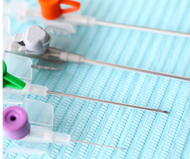
Most IV catheters follow a standardized color system:
- Orange – 14G
- Gray – 16G
- Green – 18G
- Pink – 20G
- Blue – 22G
- Yellow – 24G
This color coding helps healthcare professionals quickly identify the correct size during emergencies.
How to Choose the Right IV Catheter Size
Medical professionals consider several factors:
1. Patient Age and Vein Size
- Adults: 18G–20G commonly used
- Elderly or pediatric patients: 22G–24G
2. Type of Treatment
- Emergency fluids or transfusion: larger gauges (14G–18G)
- Medication delivery: smaller gauges (20G–24G)
3. Speed of Infusion Needed
- Faster delivery requires larger diameter needles
- Slower, controlled delivery uses smaller sizes
4. Patient Comfort
Smaller gauges are generally more comfortable but may not support high flow rates.
Safety Tips for IV Catheter Use
- Always use sterile equipment
- Select the smallest effective gauge for the patient
- Monitor the IV site for swelling or infection
- Secure the catheter properly to avoid movement
- Replace IV lines according to clinical guidelines
Common Mistakes to Avoid
- Using a gauge that is too large for fragile veins
- Ignoring patient comfort during selection
- Improper securement of the catheter
- Reusing single-use equipment
- Overlooking signs of infiltration or infection
Understanding IV catheter needle sizes is essential for safe and effective intravenous therapy. Each gauge serves a specific purpose, from emergency blood transfusions to routine medication delivery.
By selecting the correct IV catheter size based on patient needs and treatment type, healthcare providers can improve safety, efficiency, and patient comfort in every procedure.