

May 25, 2026
Traveling with Medical Supplies: What to Pack and How to Prepare
Traveling can be exciting, but it also requires extra preparation when you rely on medications, medical devices, or health-related supplies. Whether you’re taking a short domestic flight or planning an international adventure, knowing how to organize and transport your medical essentials can make your trip safer and far less stressful.
From prescription medications to mobility aids and emergency medical documents, proper planning ensures you stay healthy and prepared throughout your journey. In this guide, we’ll cover exactly what to pack, how to organize your supplies, and the best ways to prepare before traveling with medical equipment or medication.
Why Preparing Medical Supplies for Travel Matters
Unexpected travel delays, lost luggage, or climate changes can quickly become serious concerns if you depend on medical supplies. Careful planning helps you:
- Avoid interruptions in medication schedules
- Prevent loss or damage to medical equipment
- Stay compliant with airline and security regulations
- Handle emergencies confidently while away from home
- Reduce stress during travel
The more organized you are before departure, the smoother your travel experience will be.
Essential Medical Supplies to Pack
Your packing list will depend on your personal medical needs, destination, and length of travel. However, most travelers should consider bringing the following:
Prescription Medications
Always carry enough medication for the entire trip, plus extra in case of delays. Experts commonly recommend bringing at least several additional days’ worth of medication.
Keep medications:
- In original labeled containers
- Inside your carry-on bag
- Protected from heat or moisture
If your medication requires refrigeration, use an insulated travel cooler or approved medication travel case.
Medical Documents
Bring copies of important medical paperwork, including:
- Prescriptions
- Doctor’s notes
- Medication lists
- Emergency contact information
- Health insurance cards
- Allergy information
For international travel, ask your doctor if you need translated documentation for customs or airport security.
Medical Devices and Equipment
Depending on your condition, you may need:
- CPAP machines
- Blood glucose monitors
- Insulin pumps
- Portable oxygen concentrators
- Mobility aids
- Hearing aid batteries
- Chargers and adapters
Pack backup batteries and charging cables whenever possible.
Basic Travel Health Kit
Even healthy travelers benefit from a small medical kit containing:
- Pain relievers
- Motion sickness medication
- Bandages
- Cleansing wipes
- Hand sanitizer
- Thermometer
- Electrolyte packets
- Anti-diarrheal medication
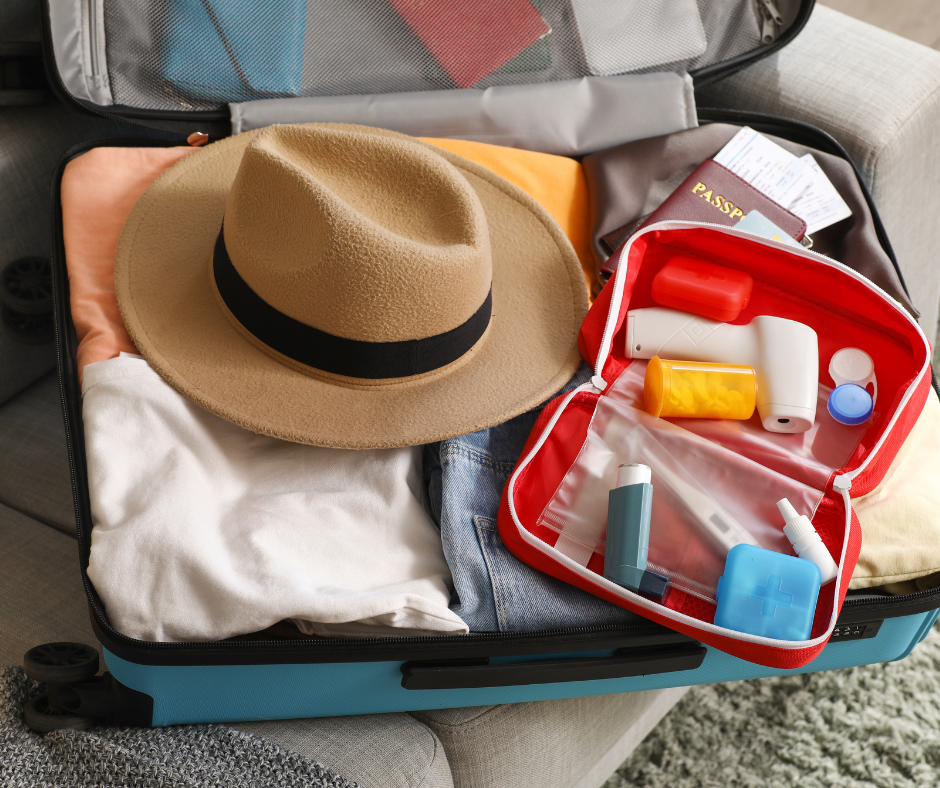
How to Pack Medical Supplies Safely
Proper packing protects your supplies and helps you access them quickly when needed.
Use Carry-On Luggage
Never pack essential medications or medical devices in checked baggage. Lost luggage can create major health risks, especially during long trips.
Your carry-on should include:
- Daily medications
- Emergency supplies
- Medical documents
- Fragile devices
- Necessary chargers
Organize Supplies Clearly
Use labeled pouches or organizers to separate:
- Daily medications
- Emergency medications
- Device accessories
- First-aid items
Clear organization speeds up airport security screening and reduces confusion during travel.
Protect Temperature-Sensitive Items
Some medications lose effectiveness if exposed to extreme temperatures. Consider:
- Insulated travel cases
- Gel cooling packs
- Temperature-monitoring pouches
Always verify airline policies for transporting refrigerated medications.
Understanding Airport and TSA Rules
Security regulations can feel intimidating, but most airports accommodate travelers with medical needs.
Traveling with Liquid Medications
Prescription liquids are generally exempt from standard liquid limits when declared during screening. Inform security officers before screening begins.
Traveling with Needles or Syringes
You may carry syringes and injectable medications when accompanied by labeled medication. Keep them together for easier inspection.
Medical Devices at Security Checkpoints
Devices such as insulin pumps or CPAP machines may require separate screening. Inform security staff if your device cannot safely go through scanners.
Research airline and airport policies before your departure to avoid surprises.
Tips for International Travel with Medical Supplies
International travel often requires additional preparation.
Check Medication Restrictions
Some countries restrict medications that are legal elsewhere. Review your destination’s customs regulations well before departure.
Learn Emergency Healthcare Options
Before traveling:
- Locate nearby hospitals or pharmacies
- Understand local emergency numbers
- Confirm insurance coverage abroad
Travel insurance with medical coverage can provide valuable protection for international trips.
Prepare for Time Zone Changes
If you take medication on a strict schedule, discuss time zone adjustments with your healthcare provider before traveling.
Preparing for Emergencies While Traveling
Unexpected situations can happen anywhere. Being prepared helps you respond quickly and safely.
Create an Emergency Plan
Your plan should include:
- Emergency contacts
- Medication schedules
- Medical conditions
- Nearby healthcare facilities
Store digital copies on your phone and printed copies in your luggage.
Wear Medical Identification
Medical alert bracelets or wallet cards can provide life-saving information in emergencies.
Best Practices for Stress-Free Travel
Traveling with medical supplies becomes much easier with a few smart habits.
Arrive Early
Extra time at airports helps reduce stress during security screening or medical inspections.
Keep Supplies Accessible
Avoid burying important medications at the bottom of your bag. Keep frequently used items within easy reach.
Monitor Your Health During Travel
Long flights and changing climates can affect your condition. Stay hydrated, rest when needed, and maintain your medication schedule.
Traveling with medical supplies requires planning, but it should never stop you from exploring new destinations confidently. By organizing your medications, understanding travel regulations, and preparing for emergencies, you can focus more on enjoying your journey and less on potential complications.
Whether you’re traveling domestically or internationally, preparation is the key to safe, comfortable, and stress-free travel with medical supplies.